
St. Clair Juvenile Release Paths
The center is associated with 20th Judicial Circuit Court Services and Probation. Its official county role is juvenile detention, not adult jail custody. A youth may leave under juvenile-court authority, return to an authorized guardian under conditions, move to another placement, or remain subject to probation or court services. Public adult roster logic cannot identify which event occurred.
Because access is restricted, no names, photographs, booking lists, or speculative departure details should be published as a juvenile release product. An authorized requester should use the court, counsel, juvenile probation, or detention-center channel that applies to the case. The office can then explain what proof of identity, relationship, or legal authority is required.
Confirm a Juvenile Release
The public adult search is the wrong route. Start with the person or office already connected to the juvenile matter. Counsel can interpret the court order. A parent or guardian can ask the detention or probation office what documentation is needed. Court Services can route an entitled inquiry without exposing protected information to the public.
- Do not search or publish the youth through the adult released-inmate pages.
- Contact counsel or the juvenile court office identified in the case.
- Call the detention center or Juvenile Probation and ask for the authorized-access procedure.
- Provide identity and relationship documents only through the office's approved channel.
- Keep any status wording exact, including release, placement, probation, or transfer.
The adult St. Clair County release search covers adult county and IDOC systems only. It must not be treated as a juvenile locator.
Juvenile Center Authorized Contact
The St. Clair County Juvenile Detention Center is at 9006 Lebanon Road, Belleville, Illinois 62223. Its telephone number is 618-397-9546. County Juvenile Probation is nearby at 9002 Lebanon Road and can be reached at 618-394-1195. No public counter hours for release-record inquiries were verified, so call first.
Authorized inquiry route
Juvenile Detention Center
9006 Lebanon Road
Belleville, IL 62223
618-397-9546
Juvenile Probation
9002 Lebanon Road
Belleville, IL 62223
618-394-1195
These numbers are routing points, not promises that staff may disclose a record to every caller. Juvenile, sealed, and protected information carries access limits. A refusal to discuss a case with an unauthorized caller does not prove detention, release, transfer, or any other outcome.
St. Clair Juvenile Record Scope
The county describes the center as serving juvenile offenders ages 10 through 16. That description identifies the facility's role but does not authorize public access to an individual youth's information. It is separate from the St. Clair County Jail, which is an adult sheriff facility, and separate from IDOC's adult prison system.
Adult custody terms can also mislead here. An adult “booking,” “inmate roster,” “parole,” or IDOC “Projected Discharge Date” should not be mapped onto a juvenile case unless the responsible juvenile authority uses that term. Juvenile court orders, detention decisions, placements, and probation records follow their own rules. The correct record comes from the office controlling that event.
Why Juvenile Records Stay Separate
St. Clair County's adult jail search is designed around current adult inmates. Adding a youth's name or photo to a public release list would create a new disclosure that the official adult system does not make. Confidentiality protects the integrity of juvenile proceedings and the privacy interests set by law and court rules.
An access limit is not a gap to fill with social posts, news items, or a commercial search. Those sources cannot establish the legal custody event and may identify the wrong person. Authorized users should preserve the court's exact wording and ask the court or probation office to clarify any term they do not understand.
St. Clair Facility Differences
The county contains several facilities with similar geographic labels but very different records. The adult county jail is controlled by the sheriff. SWICC and its work camp are controlled by IDOC. The juvenile center is tied to Court Services and Probation. A name's absence from one system cannot establish status in another.
| Facility | Correct record authority |
|---|---|
| Adult county jail | Sheriff and Circuit Clerk |
| Juvenile detention center | Juvenile court, counsel, and probation |
| SWICC or work camp | IDOC |
This division is the central safeguard. It prevents an adult public-search workflow from disclosing or mischaracterizing a protected juvenile matter.
Authorized Juvenile Release Proof
An entitled requester should ask which record documents the court-authorized change and which office maintains it. Depending on the case, that may be a juvenile court order, probation record, detention movement entry, or placement document. The date a court authorizes a change may differ from the time the center completes it. Keep those events separate and let the responsible office define its own status terms.
Identity should be handled through the secure process the office provides. Do not place a youth's full identifying details in an ordinary public message or send them to a third-party search box. Counsel can often make the most precise request because counsel has the case number, order, and authority to review protected material. A parent or guardian should ask what proof of relationship the office requires before discussing the matter.
Juvenile Release Access Limits
Illinois public-record principles do not turn all government-held material into an open roster. Juvenile information, sealed matters, private details, and safety-sensitive records can be withheld or limited. The center's refusal to confirm a name to a public caller is consistent with that boundary. It should never be described as evidence that the youth is present, absent, released, or transferred.
The same caution applies to a public court search. A missing matter may reflect juvenile access rules, sealing, identity differences, or an interface limit. It does not establish that no proceeding occurred. Use the authorized juvenile route and avoid reconstructing a protected case from scattered public references. The purpose is accurate contact with the controlling office, not creation of a parallel public file.
St. Clair Juvenile Court Terms
Adult corrections labels should not be imported without support. Probation is court-ordered community supervision, but juvenile probation operates through the juvenile court services structure. A placement can involve another authorized setting without being an adult jail transfer. A release from detention can leave court conditions in force. None of these events should be shortened to “free” because that word erases the legal status.
- Detention
- Secure juvenile custody authorized under the juvenile process.
- Placement
- An authorized setting that may follow or replace detention.
- Juvenile probation
- Court supervision administered through juvenile probation services.
- Authorized requester
- A person legally entitled to receive the protected information sought.
Juvenile Release Record Accuracy
Keep an audit trail when an office lawfully supplies information. Note the office, date, case or reference number, exact status wording, and whether the source was an order, verbal confirmation, or maintained record. Do not publish the youth's name, image, address, or case details merely because an authorized person received them.
If two authorized sources appear to conflict, ask the office that controlled the specific event for clarification. A court may describe legal authority while detention staff record physical movement. Probation may describe ongoing conditions after detention ends. The records can all be accurate while answering different questions. Precision protects the youth and prevents a release date from being confused with the end of every court obligation.
Juvenile Probation Contact Difference
Juvenile Probation at 9002 Lebanon Road should not be confused with Adult Probation at 11 West Lincoln or the statewide pretrial team at the county courthouse. Each office administers a different legal status. Adult Probation handles adult court supervision, pretrial staff handle conditions while an adult case is pending, and IDOC parole handles people released from state prison. None is a substitute for the authorized juvenile channel.
When calling, describe the relationship to the youth and ask only for the procedure to make an entitled inquiry. Staff may require counsel, a case number, identification, or another form of authorization. Do not pressure staff to disclose protected details over the telephone. A procedural answer can still identify where an authorized written request belongs.
Juvenile Transfer Is Not Release
A move from the detention center to another authorized placement ends one location's custody without necessarily ending the court's control. The same distinction appears in adult systems, but juvenile records require extra care because the destination and case details may be protected. Use the exact term supplied by the juvenile authority.
If the authorized record says transfer or placement, do not relabel it a community release. If it says return to a guardian under conditions, preserve those conditions only within the access rights of the recipient. A later end of juvenile probation can be a separate event from the date detention ended. Recording those milestones separately prevents an incomplete date from becoming a misleading public claim.
Official Juvenile Agency Context
The county's Probation and Court Services page identifies the proper local agency context for an authorized juvenile inquiry.
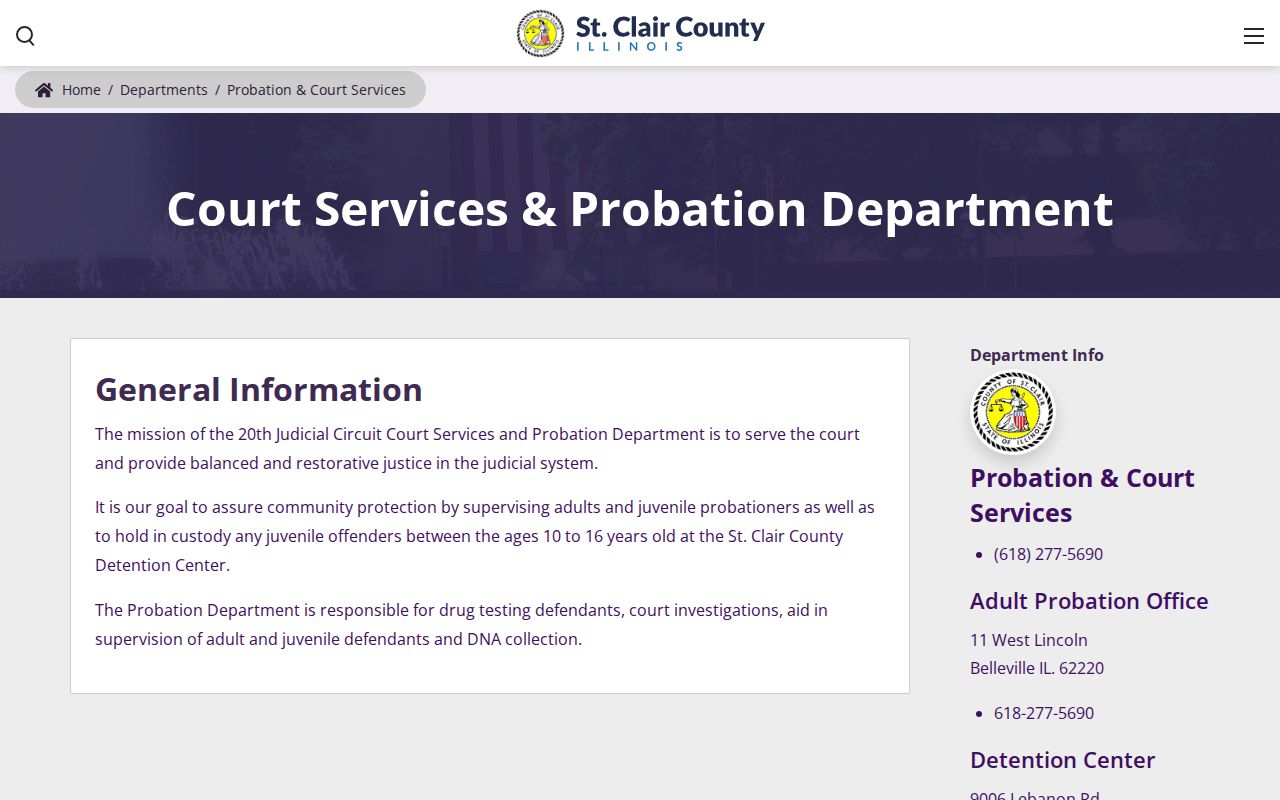
The official page supports contact with Court Services and Probation. It does not create a public juvenile release roster.