
Release Mugshots as Public Records
A booking photograph documents agency intake. It does not establish guilt, disposition, release time, or present location. The current-inmate display may stop showing someone while the record remains retained. Illinois FOIA can encompass photographs, but exemptions, redactions, juvenile confidentiality, and sealed matters can limit access.
The Illinois Mugshot Website Act regulates commercial publication and removal conduct. It does not order a sheriff to publish every photo.
Where a Released St. Clair County Inmate's Mugshot Appears
Use the source that created the image. One system's photo does not prove another system held or released the person.
| Channel | Photo status | Access |
|---|---|---|
| Sheriff current roster | Photo field not verified | Current-inmate page |
| Released archive or app | None verified | Do not substitute another county |
| Sheriff request | Maintained photo may be requested | Illinois FOIA form |
| IDOC search | Front and side images may appear | IDOC search |
| News | Case-specific and dated | Read context |
VINELink is a custody-alert tool, not a permanent photo archive.
The Sheriff Roster and Mobile App
The sheriff describes an hourly refreshed current-inmate search. Official sources did not verify a released tab, photo-retention window, or mobile app. Disappearance means only that the person is not currently shown. It proves neither release nor photo deletion.
Use Jail Releases: 24 Hours for the local verification workflow. Alabama's 48-hour roster and Michigan's St. Clair portals are wrong jurisdictions.
Requesting a Booking Photo
A focused request separates the photo from custody history. Illinois FOIA generally provides five business days for a noncommercial response, subject to extension and exemptions.
- Open the sheriff's forms page.
- Identify the person, booking number or date, and St. Clair County Jail.
- Ask for “the booking photograph in the electronic format maintained.”
- Separately request custody history, actual out time, and destination if needed.
- Select electronic delivery and retain the response.
No special photo fee is published. Statutory copy and actual electronic-media costs may apply.
Third-Party Sites and News Sources
An old story or cached image can document that a photo circulated. It cannot establish the later court result or current custody. Commercial aggregators may be stale, misidentify people, omit dispositions, or demand removal fees. Prefer sheriff, IDOC, and court records.
An IDOC image proves state processing, not St. Clair County Jail booking. Read status and release fields instead of drawing a release conclusion from the image.
Removing a Mugshot and the Effect of Expungement
Sealing limits public access to an eligible record. Expungement can remove eligible records from ordinary public access under Illinois law. Neither automatically makes every earlier copy vanish. The Circuit Clerk identifies MX sealing and expungement matters, and Illinois Courts provides approved forms.
The Illinois Criminal Identification Act provision appears below.
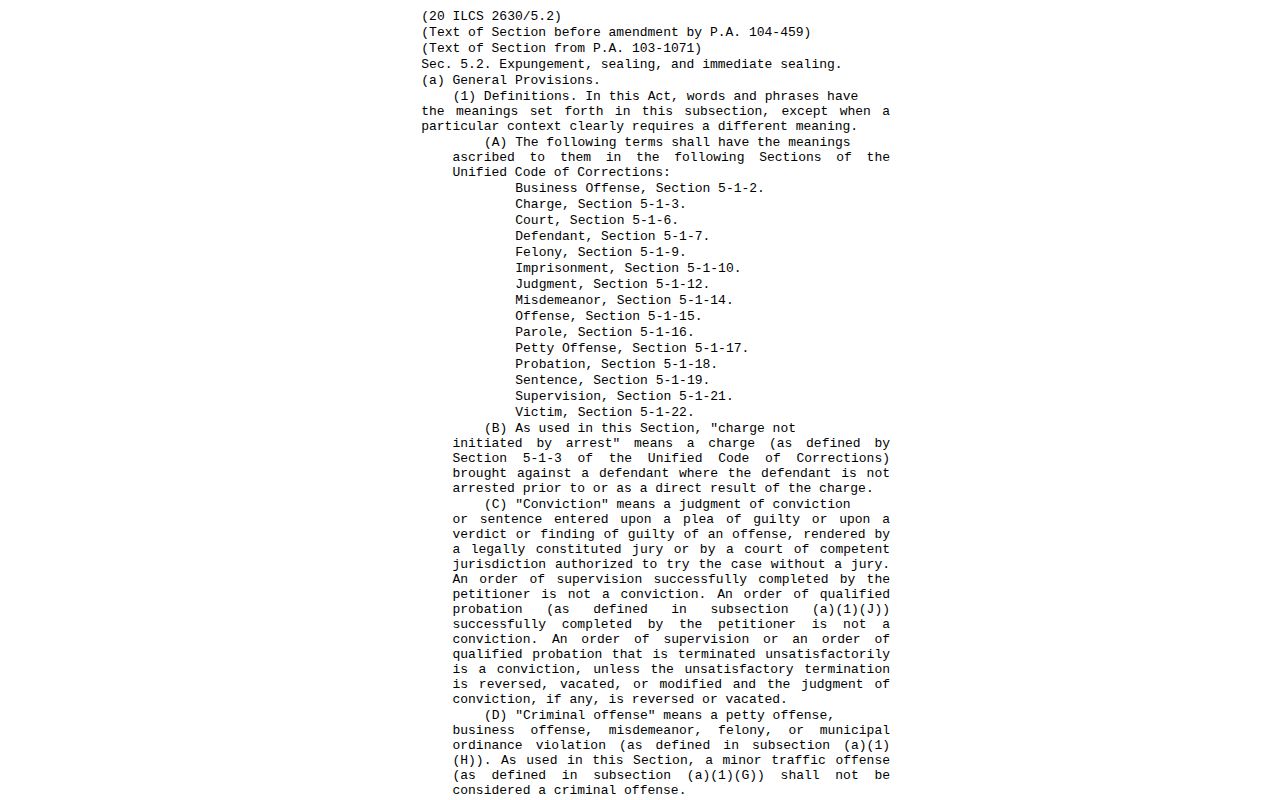
The statute defines access consequences; it does not turn an old photograph into current-custody proof.
St. Clair Photo Record Limits
A booking photo answers a narrow question: an agency created an intake image. It does not state the legal result. Charges may be dismissed, a court may order pretrial release, a sentence may end, or another agency may take custody. The picture looks the same after each event, so it cannot establish which path occurred.
For St. Clair County Jail, pair the image with custody history and the Circuit Clerk docket. Ask the sheriff for actual out date and time plus a disposition or destination code when maintained and releasable. Ask the clerk for the order, sentence, dismissal, probation entry, warrant, or discharge relevant to the case.
For IDOC, read offender status, location, admission and release information, Projected Discharge Date, and sentence blocks. Front and side photographs identify a state record but do not replace those fields.
Illinois St. Clair Photo Sources
Search results are unusually easy to misread. St. Clair County, Alabama publishes a tempting recent-release roster, while Michigan uses similarly named portals. Neither documents Belleville, East St. Louis, or an Illinois release. A polished wrong-state page remains false evidence.
Check an official Illinois or `stclaircountyil.gov` domain, Illinois geography, and the 618 area code. The sheriff operates the Belleville jail. IDOC controls Southwestern Illinois Correctional Center in East St. Louis. Their photographs and records are not interchangeable.
Note: No verified Illinois St. Clair sheriff app, released-photo tab, or rolling booking-photo gallery appeared in the official-source sweep.
St. Clair IDOC Photographs
IDOC public records may include front and side photographs while an individual record remains available. This fits a person processed in the state system, including someone at Southwestern Illinois Correctional Center. It does not prove the county jail took the same photograph or that county custody ended on a given day.
If the online record is unavailable, the IDOC FOIA office can receive a focused request for a maintained state photograph. Keep the photograph request separate from status or discharge data because each record answers a different question.
The official IDOC records route appears below.
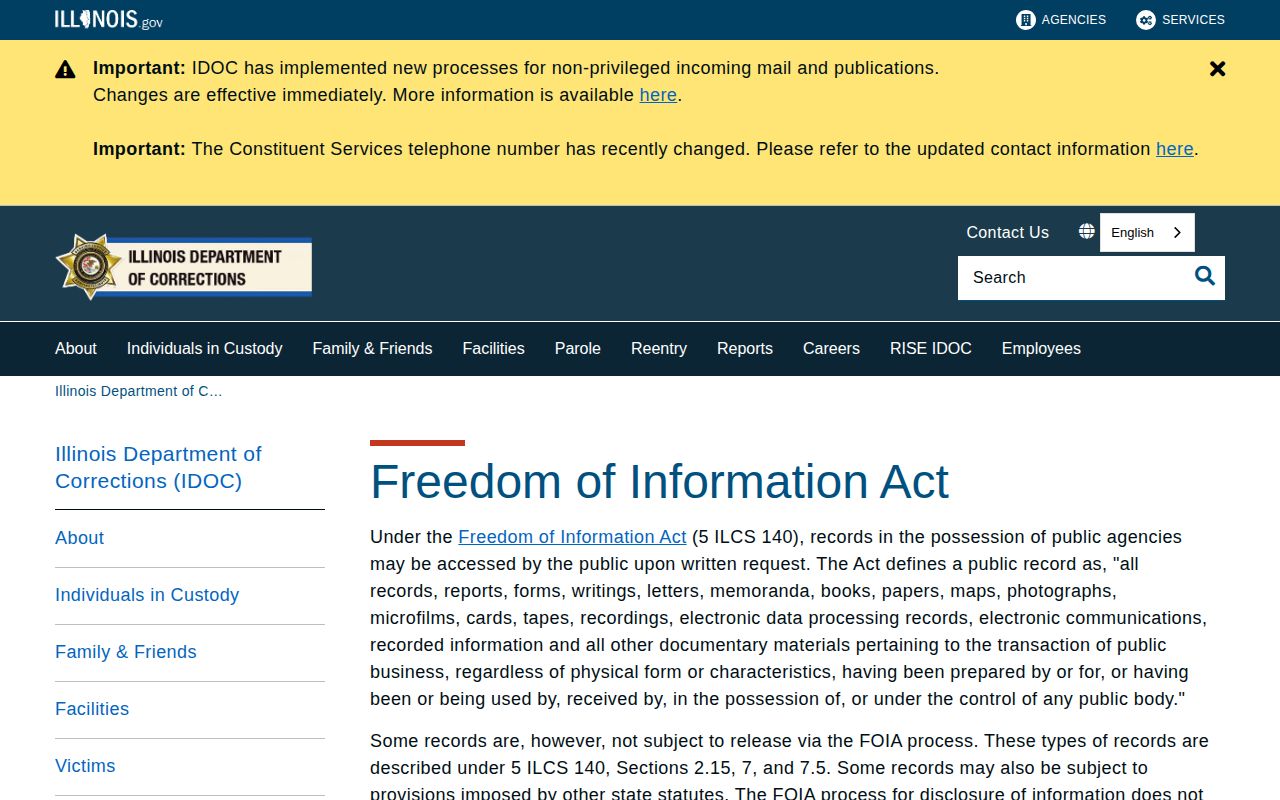
The state route applies to IDOC records, while the sheriff form applies to county booking material.
St. Clair Expungement Records
The Circuit Clerk's categories include MX sealing and expungement matters. That local category gives the court path for the effect of an entered order. Illinois Courts supplies approved forms, but eligibility and relief depend on the actual case and statute.
Read an order before asking an agency to change access. Identify the record, order date, and affected agency. An older news copy may predate the order. Do not infer that relief was denied merely because an old image remains somewhere.
The Mugshot Website Act addresses commercial removal practices rather than creating a sheriff gallery or automatic deletion. Use the official court order and communicate with the record custodian. A payment demand from an unrelated publisher does not prove the government record remains public.
Requesting St. Clair Photo Context
A useful photo request includes enough detail to locate one booking without asking for an undefined gallery. Provide the person's name, known booking date or range, booking or master number if available, and St. Clair County Jail as the agency. Ask for the image in its maintained electronic format. An electronic request avoids assuming that a printed page or certified copy is needed.
Request custody history separately. Useful maintained fields may include booking number, admission date, actual out date and time, court-release entry, disposition or destination code, and transfer agency. A booking image proves intake, while those fields explain the later movement. The sheriff may apply exemptions or redactions, and the research does not establish that every requested field is public in every case.
Illinois FOIA generally provides a five-business-day response period for a noncommercial request and allows a statutory extension with notice. The first 50 black-and-white letter or legal pages are generally free under the statute, with later pages capped at the stated rate; electronic media can be charged at actual cost. These general rules do not create a special booking-photo fee or guarantee disclosure.
Reading St. Clair Photo Results
Confirm that the response came from the expected custodian. A St. Clair County Jail photograph is a county booking record. An IDOC front or side photograph is a state corrections record. A court exhibit, police release, or news image can have another origin. Similar appearance does not make those sources interchangeable, and a later state photo does not prove that the county jail retained the same image.
Dates deserve equal care. The image-creation date may be the booking date, not the release date. A file-modified date may reflect database handling rather than the event. A webpage publication date may come later still. Use explicit agency fields and court entries for chronology. Do not estimate release from clothing, background, image quality, or the day a web result disappeared.
If identity is uncertain, compare official identifiers instead of relying on the face alone. Common names, aliases, spelling variants, and changed appearance can lead to false matches. IDOC numbers, county booking numbers, birthdate where lawfully displayed, and the reporting agency provide stronger confirmation. Stop if the official record does not support the match.
Sealed St. Clair Photo Access
Juvenile material belongs outside the adult public search. The St. Clair County Juvenile Detention Center is associated with juvenile court and probation, and authorized people must use those protected channels. A lack of a public image is not evidence of release, detention, or destruction. It may simply reflect confidentiality.
Sealed and expunged matters also require restraint. Access changes depend on the entered order and applicable Illinois law. An agency may need time to process notice, and separately held copies may follow different lawful duties. Keep the court order and agency correspondence. If a public page remains after implementation, contact the originating office with the order details rather than assuming the order has no effect.
Old official press releases or news coverage may remain as dated historical publications. Their presence does not supply current custody, current charges, or a present court disposition. Read the publication date and original context, then use current court and custody records for the question being asked. Photo discovery should remain a records-navigation task, not a substitute for release verification.
Photo Retention and Release
The Local Records Act governs disposal through approved schedules but does not create one statewide retention period for every booking image or website display. A photo can disappear from a public roster while remaining in the underlying agency record. It can also be withheld or removed from ordinary access for a lawful reason. Ask the custodian about the specific record rather than treating the website as the complete archive.
Release does not itself erase intake material. The actual public-access result may depend on FOIA exemptions, a sealing or expungement order, juvenile confidentiality, protected personal information, or another rule tied to the record. The absence of a photo should be reported only as absence from the checked source at that time.